
From West Africa to Rural America: Rose Kargbo’s Global Health Calling
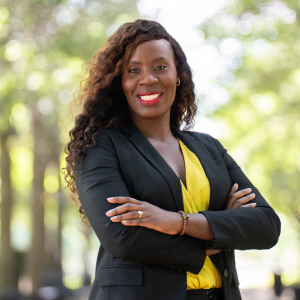
In 2017, Rose Kargbo ’23 took a life-changing trip, volunteering as a nurse with an NGO hospital ship providing surgical care in underserved parts of West Africa.
“One of the things that broke my heart was caring for patients post neurosurgeries in the Republic of Benin, where the entire country had only one neurosurgeon for every 1.4 million inhabitants,” she says. “There was no real follow-up on those patients after the ship left.” She wondered why the region's gross lack of healthcare infrastructure and access to care loomed so large. “What is missing in terms of quality and continuity of care, and why is it not happening?”
The difference in healthcare between the Global North and Global South didn’t sit well with her, and that led her to seek further answers through the MS in Global Health (MSGH) program at Northwestern University School of Professional Studies (SPS).
Leveling up after over a decade in the healthcare field
Kargbo already had fourteen years of experience in healthcare when she applied to the MSGH program. After earning her bachelor’s and nursing degrees in the United States, she began her career as a cardiac nurse and later found her niche in pediatric critical care at Montefiore Children’s Hospital in New York.
She inherited her interest from her parents, both healthcare workers. “My dad is a physician and my mother is a nurse, but she also holds her master’s in healthcare administration,” she explains of her childhood spent in Liberia. “I just come from a big medical family,” she says. With the NGO, she saw an opportunity to deliver healthcare to people who needed it most. “I wanted to help improve access to care in the region I consider home.”
Kargbo intended to keep working as a nurse while taking her graduate school courses and was thus drawn to the MSGH program’s emphasis on real-world issues, diverse faculty, practical skill-building, and flexible remote learning. “Northwestern has a lot of professors who are industry leaders,” she says. “They’re on the forefront and they truly understand what’s taking place day to day. The courses were not just strictly theory.”
MS in Global Health faculty members like Arda Gucler filled in Kargbo’s knowledge gaps in global diplomacy, managing international relations, and understanding the history and the differences between regions. “Professor Gucler made sure that we learned the foundation of health systems, how each country deals with their healthcare sector, and what makes for a thriving healthcare sector,” Kargbo says.
The knowledge she gained complemented her nursing background by bridging clinical care with global health systems, research, and leadership. “It reinforced that improving individual patient outcomes requires addressing the broader systemic and social factors that influence health access and quality.”
Real world applications
Kargbo credits faculty member Martin Nieuwoudt with helping her hone her research skills, even though before graduate school, she says, “I dreaded research. I thought I hated it.” In Nieuwoudt’s research methods class, students were required to submit a mock research proposal, which they later structured as a grant proposal in his subsequent grant writing course.
Nieuwoudt helped her narrow down her proposal to the intersection of physical and mental health. “I became obsessed with that topic because of what I was experiencing at the time,” she says. Early in the program, Kargbo suffered a workplace injury at the hospital that led to a diagnosis of Complex Regional Pain Syndrome (CRPS), which sent her on a transformative health journey of her own. “I was a healthy 33-year-old when I got injured. But within two years, I was being told I was pre-diabetic, I had pre-hypertension, and I had high cholesterol.” She saw for herself how physical and mental stress on the body can bring on additional illnesses.
The topic of how depression and anxiety affect the cardiovascular system became a central research focus. “I decided then that was going to be my life’s work. I am drawn to this work because I aspire to provide truly holistic care that bridges the gap between mental and physical health for others in the same profound way my providers did, which got me through my darkest moments and set me on the road to recovery,” she says.
Global, no matter where you are
Kargbo says one of the program’s greatest strengths was the global community it fostered, starting with faculty like Dr. Ashti Doobay-Persaud, who has a background providing healthcare in Belize, South Africa, and the Himalayas. The student population also hailed from across the globe and represented a variety of sectors. “[My classmates] were not just nurses or doctors. I was fascinated to have people in IT, the pharmaceutical industry, and the insurance industry within this program. It’s an excellent way to meet and network with people in different career fields.”
After graduation, Kargbo first intended to return to Africa, but saw a need for her expertise in another part of the world that struggles with health inequality: rural America.
Today, she works at a primary care practice in Bettendorf, Iowa. “There are parts of the Midwest that are so rural that access to healthcare is as dire as access to healthcare in the Global South,” she says. Her experience has been “insightful, eye-opening, shocking, unimaginable, and unpredictable at the lack of access to care in one of the richest countries on the planet.” Her time at Northwestern expanded her understanding of healthcare beyond the bedside. “It taught me to think critically about health equity and sustainability, concepts I now integrate daily into my clinical practice.”
Kargbo is now back in school, pursuing a dual certification as a family nurse practitioner and mental health nurse practitioner, with dreams of ultimately returning to Liberia to open a holistic practice serving families. She feels especially called to work with children and adolescents burdened by generational trauma, raised in a nation scarred by 13 years of civil war and influenced by parents who have never fully processed or reconciled the grief and suffering of living through such tragedies.
“I hope to draw upon both my knowledge and lived experience to equip individuals with tools to heal from their trauma, creating the possibility for transformative change in their mental and physical well-being,” she says.
Northwestern University School of Professional Studies offers many degree and certificate programs, with evening and online options available. To learn more about how Northwestern University's online Master's in Global Health prepares graduates to advance their global health careers, fill out the form below and we will be in touch with you soon.