
Heidi Sampang ’17 Solving Geographic Healthcare Inequality
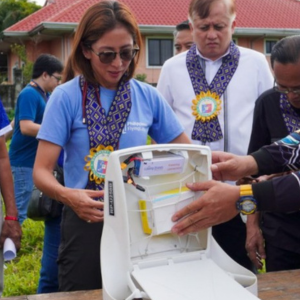
It takes three hours by boat and four hours on foot to reach Geparayan and Basilan, remote island communities in the Philippines marked by rugged terrain and periodic military conflicts. Until recently, residents had never received medical care of any kind, until pediatrician Heidi Sampang, ’17, made the trek with Remote Area Medical (RAM), a U.S.-based NGO. Sampang would later found Philippines Flying Labs and transform missions like these by replacing some of the arduous travel with 14-minute drone flights and AI-enabled logistics.
Sampang, an alumna of Northwestern University School of Professional Studies’ inaugural MS in Global Health (MSGH) cohort, is tackling one of the root causes of healthcare inequity: geographic isolation. She brings together her clinical training, MSGH knowledge, deep compassion, and courage to reach patients cut off from care.
Global Health Pediatrician on a Mission
Although she was born to a middle-class family in the Philippines, Sampang didn’t receive dental care until late in childhood, when a damaged tooth required treatment. The experience left a lasting impression. She recognized that many others around the world suffer without care and might even die prematurely.
“From a young age, I felt that healthcare is a human right, not a commodity,” she says. “Location shouldn’t justify an early death. I try to practice the Buddhist idea of interconnection—being inseparable from the well-being of others.”
She worked as a pediatrician in private practice for nearly ten years before deciding to pursue her interest in healthcare equity. She researched programs and only one, Northwestern's MS in Global Health, made it possible to continue practicing medicine while earning her degree.
The program was also designed to incorporate real-world insights and experiences she felt were missing in her clinical experience. For example, she traveled to Mozambique as part of her MSGH practicum. She also volunteered with RAM to deliver first-time medical care to Medor, an isolated mountain village in Haiti. After the 2010 earthquake in Haiti, Sampang and RAM helped treat villagers devastated by a cholera outbreak—an effort documented in NBC’s Emmy-winning Dateline feature, “Rescue in the Mountains.”
“This is why I enrolled in the MSGH program, to help people who are dying from treatable diseases just because of where they live,” she says. “The curriculum helped me understand the social determinants and how to influence community stakeholders. Real change happens at the local level.”
Philippines Flying Labs: Drones, Data, and AI for Social Good
After RAM missions in Costa Rica, Haiti, and underserved U.S. regions such as Appalachia, Sampang returned to the Philippines and asked RAM’s founder for permission to establish and lead RAM Philippines. However, while RAM’s outreach efforts expanded, stubborn geographical problems remained. Sampang then founded the NGO Philippines Flying Labs, part of the Flying Labs Network, to test drone-based healthcare delivery in the Philippines. She left private pediatric practice, focusing her care on treating patients of all ages in the field.
In 2022, the organization directed the first drone delivery of COVID-19 vaccines in the Philippines. In remote communities like Geparayan and Basilan—where tuberculosis rates are high—drones offer a way to help on-the-ground teams quickly receive medical supplies or transport patient samples for testing. It’s a game changer for isolated patients with contagious diseases who need to be tested and given lifesaving treatment immediately.
Building Philippines Flying Labs hasn’t been easy. Sampang has had to navigate regulations, limited operating skills, and a mountainous, windy climate not suitable for drones. Working closely with the community, her team tested drone models until they found one that was affordable, resilient, and practical to operate with local training—part of the knowledge sharing she believes is essential to sustainable global health efforts. Sampang is also applying AI to improve mission effectiveness, including drone data mapping and analysis of disaster damage, population trends, agricultural conditions, and other insights critical to improving health planning and response.
“In the MSGH program, it’s never ‘I’m in global healthcare so that’s all I need to think about,’” says Sampang. “My professors helped me think outside the box, which has been essential to Philippines Flying Labs. They’re working at the top of their profession and have extensive field experience. You learn how to be a problem solver and still be a compassionate practitioner. It’s easy to get focused on health policy, but they help you stay grounded in the goal of doing good.”
In addition to the NBC Dateline documentary, Sampang’s work has been featured on CNA Insider, TEDx, and the BBC’s What in the World podcast.
Northwestern University School of Professional Studies offers many degree and certificate programs, with evening and online options available. To learn more about how the Northwestern University Master's in Global Health prepares graduates to advance their careers in healthcare administration, fill out the form below, and we will be in touch with you soon.