
The ROI of Professional Education: Leadership and Impact at SPS

What is the return on investment of a master’s degree? At Northwestern University School of Professional Studies (SPS), the value of graduate education includes career advancement, leadership development, and the ability to drive meaningful change within organizations and communities.
That broader impact is evident in the work SPS alumni go on to lead: transforming organizational culture, mentoring emerging leaders, and implementing innovative solutions to complex challenges. SPS classrooms also bring together professionals with a wealth of diverse experiences, such as international work, community leadership, and entrepreneurial ventures. These perspectives enrich discussion and collaboration while fostering a supportive learning environment.
Learn more about the value of a Northwestern SPS education—and how five alumni are leveraging their SPS degree to make an impact.
Building Leaders, Not Just Specialists
Across fields such as data science, healthcare, public policy, information systems, and more, SPS programs share a common thread: they prepare students to lead.
There’s a mindset built into SPS master's programs—supported by courses focused on areas such as leadership, organizational behavior, communications, and entrepreneurship—that prepares graduates to successfully identify growth opportunities and guide organizational transformation.
“We develop courses that challenge our students and prepare them not just for their next step, but for the rest of their careers,” says Soo La Kim, Associate Dean of SPS Academic Programs.
Technical skills are essential, but SPS recognizes that professionals who make the greatest impact are those who can strategically apply their skills in meaningful ways.
Northwestern SPS students learn to:
- analyze problems through varied perspectives
- communicate insights to key players
- make decisions that consider both immediate and long-term implications
- develop critical thinking skills that help identify opportunities and the ethical framework to lead with integrity.
“Our faculty are experts in their fields who bring their relevant professional experiences to every class session,” says Kim. “And learning alongside other working adults enriches classroom discussion, because they bring such a range of perspectives and their own expertise. Our students consistently tell us how meaningful those connections with faculty and fellow students are.”
From Classroom Learning to Community Impact
Northwestern SPS programs emphasize real-world application. Students develop technical expertise and leadership skills in the classroom, then apply those skills to complex challenges across healthcare, policy, and global communities.
Addressing Global Health Challenges Through the MS in Global Health
Students in the SPS MS in Global Health (MSGH) program go through interdisciplinary training that spans healthcare delivery, regulatory navigation, program evaluation, and more.
According to Ashti Doobay-Persaud, MSGH Faculty Director, “The MSGH program provides students with concrete competencies they will need when approaching employers, as well as an industry perspective that is crucial in understanding how healthcare is delivered across the globe.”
The MSGH practicum—which consists of four weeks of practical fieldwork—provides students with opportunities to apply solutions in live settings. Graduates are prepared to work across borders, leading initiatives that bring evidence-based approaches to public health challenges within a framework of ethical and cultural awareness, leading to improved healthcare outcomes and systems in places where it’s needed most.
Driving Policy and Organizational Change with the MPPA Degree
Graduates of the SPS MA in Public Policy and Administration (MPPA) program apply their expertise to drive change in government, nonprofits, and educational institutions. The program's dual focus on policy and administration equips students with the wide range of skills they need to understand not only what needs to be done to create change but also how to make it happen.
MPPA graduates spearhead change projects that improve lives, working in areas such as government, social services, environmental sustainability, or education reform. These leaders bring analytical rigor to policy discussions, and they understand the human aspects of public service, including how to engage stakeholders, resolve conflicting interests, and implement policy.
One graduate who applies these skills in practice is Ahmed Karrar, an MPPA alum who now leads strategic initiatives that connect policy, organizational leadership, and community impact. “I lead projects internally within our firm, and also with clients who are large companies with large bureaucracies,” says Ahmed, reflecting on how the program shaped his professional approach. “Many of the skills that I gained at Northwestern University transferred naturally when it came to public administration and organizational leadership.”
How Northwestern SPS Master’s Programs Deliver Career and Leadership ROI
While traditional metrics like salary, job title, and promotions are important, the true value of an SPS education lies in its ability to foster leaders who drive systemic change and inspire others. The broader picture of ROI appears in real-world influence SPS graduates have within their organizations and communities.
The impact of an SPS education shows up in several ways:
- Stronger teams that function more effectively because an SPS graduate leads with vision, empathy, and clear communication
- Communities that benefit from evidence-based policy, supported by SPS alumni who bring expertise in advocacy, research, and analysis
- Organizations strengthened by thoughtful leadership, guided by professionals who know how to navigate complexity and inspire excellence
- New leaders emerging through mentorship, as SPS alumni share their experiences, model best practices, and create pathways for others
This is the ROI that SPS delivers: professionals who lift others up, see challenges as opportunities, and have the skills, confidence, and vision to make things happen.
SPS Alumni Who Are Leading the Way
SPS alumni apply what they learn in the classroom to real challenges across industries, communities, and global systems. Their careers reflect the broader return on investment of an SPS education: leadership that drives meaningful change.
Alex Ramnarine: Applying AI Leadership After Northwestern’s MS in Data Science
 Alex Ramnarine leveraged Northwestern's Master of Science in Data Science with AI specialization to become a pioneering leader in applying artificial intelligence across multiple industries. She developed a patented AI software platform as one of BrainPOP's first AI engineers, transforming educational technology. As founding head of AI at fintech startup Domify, she established critical infrastructure for emerging companies. Ramnarine shared her expertise as adjunct professor at Touro University and participated in prominent tech leadership panels alongside Northwestern alumni. By bridging creative and technical expertise, she's advanced AI applications in education and finance while mentoring future data scientists and demonstrating how interdisciplinary skills drive innovation in rapidly evolving technological landscapes.
Anna Lisa Castle: Driving Global Water Policy Collaboration Through the MA in Public Policy and Administration
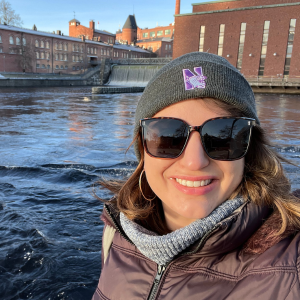 Anna Lisa Castle leveraged her expertise as Alliance for the Great Lakes Policy Director to create an innovative cross-continental collaboration in the Master's in Public Policy and Administration Global Policy Lab.
Recognizing parallel water challenges between the Great Lakes and Baltic Sea regions, she partnered with Finland's Åbo Akademi University to develop a groundbreaking international course. Castle designed the curriculum, recorded expert interviews from both regions, and facilitated meaningful exchange between American and Finnish students with diverse backgrounds.
Her leadership enabled students to develop real-world policy solutions addressing water affordability, agricultural runoff, and governance challenges while gaining invaluable global perspectives. This collaboration demonstrated how international partnerships can address shared environmental issues, benefiting future policy professionals and establishing a model for cross-cultural policy education that bridges oceanic divides.
Dana Aronson Schinasi: Advancing Digital Health Through Northwestern’s Master’s in Health Informatics
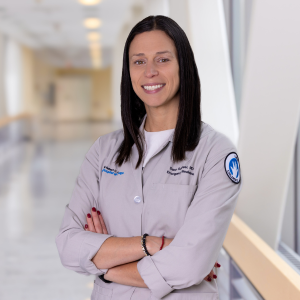 Dana Aronson Schinasi, MD, MHI, recognized telemedicine's potential years before COVID-19 and pursued Northwestern's Master's in Health Informatics to advance pediatric care delivery.
Starting the MHI program at Northwestern SPS in 2020, Schinasi balanced frontline pandemic work with her studies, gaining high-level expertise in digital health leadership. Her education enabled rapid career advancement at Ann & Robert H. Lurie Children's Hospital, progressing from Telemedicine Director to Digital Health Medical Director and ultimately Chief Medical Informatics Officer.
As CMIO, she bridges technology and clinical care, leading the organization through complex challenges including major system downtimes while pioneering new approaches in pediatric digital health. In this role, Schinasi created an innovative digital tool for asthma patients transitioning from hospital to home, serving over 1,300 families by delivering equitable care, reducing unnecessary ER visits, and providing early patient education.
Heidi Sampang: Expanding Healthcare Access Through the MS in Global Health
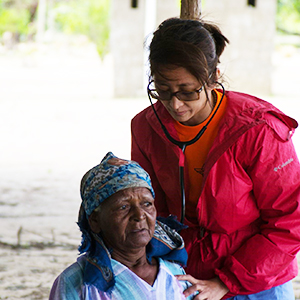 Heidi Sampang, MD, pioneered innovative solutions to healthcare inequity by founding Philippines Flying Labs, revolutionizing medical access for geographically isolated communities.
After earning her MS in Global Health, she led Remote Area Medical Philippines, delivering first-time medical care to remote villages requiring hours of boat and foot travel.
Recognizing geographic barriers as a root cause of health disparities, Sampang founded Philippines Flying Labs to implement drone-based healthcare delivery, reducing three-hour boat and four-hour foot journeys to 14-minute flights. In 2022, her organization directed the Philippines' first drone delivery of COVID-19 vaccines and now transports critical medical supplies and patient samples to communities with high tuberculosis rates.
By integrating AI-enabled logistics and data mapping for disaster response and health planning, Sampang has created sustainable, locally trained systems that save lives in previously unreachable areas. Her groundbreaking work, featured on NBC, BBC, and TEDx, demonstrates how technology and compassionate leadership can address fundamental healthcare inequities.
Ahmed Karrar: Leading Corporate Social Impact With an MA in Public Policy and Administration
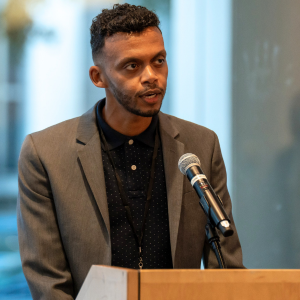 Ahmed Karrar transformed his MA in Public Policy and Administration into a career driving social impact across communities and Fortune 10 companies. As Principal of Strategic Initiatives at Ichor Strategies, he develops evidence-based strategies strengthening relationships between major corporations and their community stakeholders.
Previously an attorney at Arab American Family Services, he addressed immigration issues while building coalitions and community engagement. His blend of legal expertise, policy knowledge, and skills in statistical analysis and public budgeting bridges corporate resources with grassroots needs through data-driven solutions—turning public policy education into tangible outcomes for underserved populations.
See the Long-Term Impact of an SPS Education
The professionals who choose SPS come in search of career advancement—and they find it. But they also find something that is harder to quantify and is ultimately more lasting: the tools, mindset, and community that prepare them to become the kind of leaders who make things better for everyone around them.
That's a return on investment that extends well beyond any single career, and it's what makes an SPS education one that ripples outward for years to come.
Explore Northwestern SPS master's programs and discover how they can support your next step.