
Going Back to College as a Working Adult: How Northwestern SPS Students Balance Work, Family, and School
If you delayed higher education—or started but didn’t finish—you’re not alone. Many working adults considering going back to college wonder: Can I realistically earn a bachelor’s degree while working, raising a family, and managing everything else life requires?
For many adult learners, the answer is yes, especially when they have access to flexible programs designed around the realities of work and family life. And they’re far from alone in considering a return to college. According to a recent National Student Clearinghouse Research Center report, there are nearly 37 million people under the age of 65 who stopped their undergraduate studies. Those who decide to go back to school later can face significant challenges balancing competing responsibilities of work and family as well as uncertainty about the value of completing their degree.
The good news is that the traditional, uninterrupted path to a bachelor's degree is giving way to more diverse educational journeys. More adults are returning to college after years in the workforce, driving demand for flexible undergraduate programs. Northwestern University School of Professional Studies (SPS) has been at the forefront of this trend, offering part-time and online bachelor’s degrees designed for working adults.
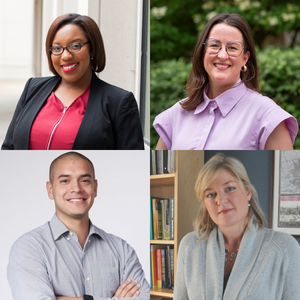
But what’s it really like for busy adults who go back to school? Read below to see how alums Santi Haag, Michele Ortiz, Ellen Gladish, and others earned a bachelor’s degree without putting life on hold.
Why do adult students go back to college to finish a bachelor's degree?
Many students return to school because they want to find a better career opportunity, pursue a lifelong interest, or ultimately attend graduate school. But for others, like alum Michele Ortiz, it’s simply about fulfilling a dream. Several years ago, she was working and attending classes at community college when, as she puts it, "life happened." She continued working but paused school to raise her two children. But once they got older, she decided it was time. She transferred the credits she had earned at a two-year community college and began pursuing her bachelor’s degree in Communications Studies.
Ortiz took classes on weekends and evenings, both online and in-person, and is grateful that flexible learning options allowed her time to attend her kids’ extracurriculars and volunteer at their school. She says she was able to quickly apply the skills from her courses in her job and planned to continue doing so with her Communications Studies degree.
“Finishing this degree was not only about learning new skills and applying them to my job. It’s also just something I've wanted to do,” says Ortiz. “It was a personal goal for me.”
For Ellen Gladish ’24, returning to school was a lifelong dream, and she wanted to be a role model to her two young children. But she also saw that a college degree was key to continuing her career trajectory. She held promising roles in theater, hospitality, and finance—but the missing degree was becoming more conspicuous and possibly an obstacle to promotion.
She returned to school the same month her son started kindergarten and graduated magna cum laude with a bachelor’s degree in Organization Behavior (formerly known as Business Leadership). Today, she is an Administrative Business Partner at Stripe, and feels that having a degree from Northwestern helped her get through the company's selective hiring process.
What does balancing work, coursework, and family look like when studying at Northwestern SPS?
Many returning adult students balance their responsibilities by combining evening and online courses, structured study time, and reduced social commitments.
Santi Haag ’23 had been working full time for years at global IT companies when he decided to pursue a bachelor’s degree at Northwestern. With demands at work and then the birth of his third child, the flexibility that SPS offered him was essential. His class time would include a mix of online and on-campus courses so he could be home more with his young children. During the week, he would also keep exercising, which he says supported his mental and physical health and helped him “be more focused in class and make better use of my time.”
Alum Dallas FitzPatrick worked in early-childhood care and education for 10 years. She says she loved it, but was ready to extend the skills gained over the years with a bachelor’s degree in Organization Behavior. A typical week for her meant working 50 hours a week at her job, then dedicating some additional time to study and occasionally turning down social events. At one point during her studies, she managed to work, attend class, and even plan her wedding at the same time.
Other students start out small to help find balance but end up developing a routine and ultimately reinvent themselves. Patricia Pendry ’00 had an undergraduate degree from her native Netherlands, but it didn’t set her up well for making a career change or attending graduate school. She enrolled in one evening psychology class at SPS just to see where it would take her.
"It confirmed that I love the field, and I decided to earn a new undergraduate degree,” she says. "I started taking more classes. I'd get the kids to bed by 7:30, and then I’d hit the books."
Pendry earned her bachelor's degree Psychology from SPS in 2000. She then went on to obtain a PhD in Human Development and Social Policy from The Graduate School at Northwestern in 2007. Today, Pendry teaches at Washington State University and conducts research on the effects of family functioning on child stress, health, and behavior.
How does Northwestern SPS make balancing responsibilities possible?
Northwestern SPS offers degrees for working adults across disciplines with flexible learning formats. In addition, SPS allows students to take off up to two consecutive quarters if needed. The array of resources and academic support for adult students earning a bachelor’s degree includes:
- Online, part-time, evening and weekend programs
- Northwestern Career Advancement
- The Writing Place and other tutoring services
- Veterans services
- Career resources
- Academic advising
- Counseling and psychological services
- Student Life
SPS also offers adult undergraduate activities, such as the Student Advisory Board, that have a leadership focus to help support their careers and build new personal and professional networks.
How do SPS instructors support older or nontraditional undergraduate students?
A combination of course design, comradery, encouragement, and respect help adult students who are going back to school. Indeed, many students point to the culture of SPS itself as supportive of their unique needs. They describe an environment where instructors—who are themselves working full-time in the fields they teach—understand the realities of balancing coursework with careers and family responsibilities.
Ortiz rounded out her studies with Spanish, taught by award-winning instructor Elena Lanza. “She is the most patient and kind person I have had the pleasure of meeting at SPS,” Ortiz says. Professor Lanza describes that Monday evening class as a close-knit, supportive cohort: “they come straight from work, stay together for a full year, get to know one another, and rely on each other to stay motivated after a full day of other responsibilities.” She keeps coursework practical, knowing that SPS students don’t have time for anything that isn’t of real-world value.
In his SPS experience, Haag found that many of the online classes take an incremental approach: “You do something every week and then when you get to the final, the midterm, you’re already on top of your stuff.”
Rather than expecting students to prepare for a handful of high-stakes exams, many SPS courses are designed around steady weekly progress. That rhythm makes it easier for working adults to fit coursework into busy schedules and it is much harder to fall behind after a hectic week at work or home. Haag also appreciated that the professors at SPS “understand that we’re all grownups. I think that helps a lot.”
Older or working adults have also developed other interests and have often gained a certain level of expertise. That was the case for Frank Wayne ’16 who was a full-time senior systems analyst with a one-year-old son when he decided to pursue a bachelor’s degree in Information Systems.
“The professors allow for the skill level of each student and challenge those of us who already work in the field,” he says. “I also have many interests outside of IT and have taken great pleasure in my photography, astronomy, and English classes.”
For Pendry, instructor support made all the difference in sticking with the undergraduate program and achieving her goals. She says the late Dr. Scott Acton helped her realize she could conduct clinical research and inspired her to pursue graduate school: “He and other SPS instructors, like Eshkol Rafaeli and Michael Bailey, gave me a lot of encouragement and flexibility.”
How does earning the degree impact careers or confidence?
Earning a bachelor's degree delivers much more than a credential. According to the U.S. Census Bureau, more than 75% of people working in professional occupations and 64% working in management, business, and finance have a bachelor’s degree or higher—and they tend to earn more than those whose highest credential is a high school diploma.
Haag intentionally selected courses that complemented his work in information technology, allowing him to connect classroom learning with real-world challenges and further his career. For Wayne, returning to school meant keeping pace with rapidly evolving technology and strengthening his professional expertise and career opportunities. Ortiz felt more confident after seeing the diverse student body: "I felt a little out of place at first, but I soon found out there are students ranging from 18 to 70 years old. I fit right in."
For many others, the impact is transformational.
FitzPatrick leveraged the leadership and organizational skills she developed in her work experience and her undergraduate studies into a new career path and now serves as Global Vice President of Culture and Belonging for an international consulting company. Meanwhile, Pendry's decision to enroll in a single evening course ultimately led to a second bachelor's degree, a Northwestern PhD, and a career as a university professor and researcher.
Gladish is proud of herself for making her long-deferred dream come true. Being a working mom who goes back to school wasn't simple, even with an extremely supportive spouse and community, but she said, “People at SPS are always willing to help. It's okay to ask questions and learn, it just opens you up to so many fun things and interesting conversations. It's definitely worth it.”
What advice would you give to other working adults considering going back to school?
Across their different backgrounds and careers, SPS graduates offer remarkably similar advice: Don't wait for the "perfect" time. Life will always be busy, but taking even one course can become the first step toward something much larger.
"I can keep procrastinating, or I can start now," Ortiz told herself before returning to college after raising her children. “I can do this.”
Students repeatedly describe time management as the key to success. "Time management, focus, and dedication" is how FitzPatrick summarizes the balancing act.
Haag encourages prospective students to approach the experience with curiosity rather than anxiety. "Come in with an open mind," he says. "If I can do it, anyone can do it. I have three kids, I have a full-time job, and I'm able to manage it." Earning a degree doesn’t have to mean putting your life on hold. Many adult learners are able to build a future while continuing to live the life they already have.
Northwestern University School of Professional Studies offers many degree and certificate programs, with evening and online options available. To learn more about Northwestern University's part-time undergraduate degree programs, complete the form below and we will be in touch with you soon.