
Faculty

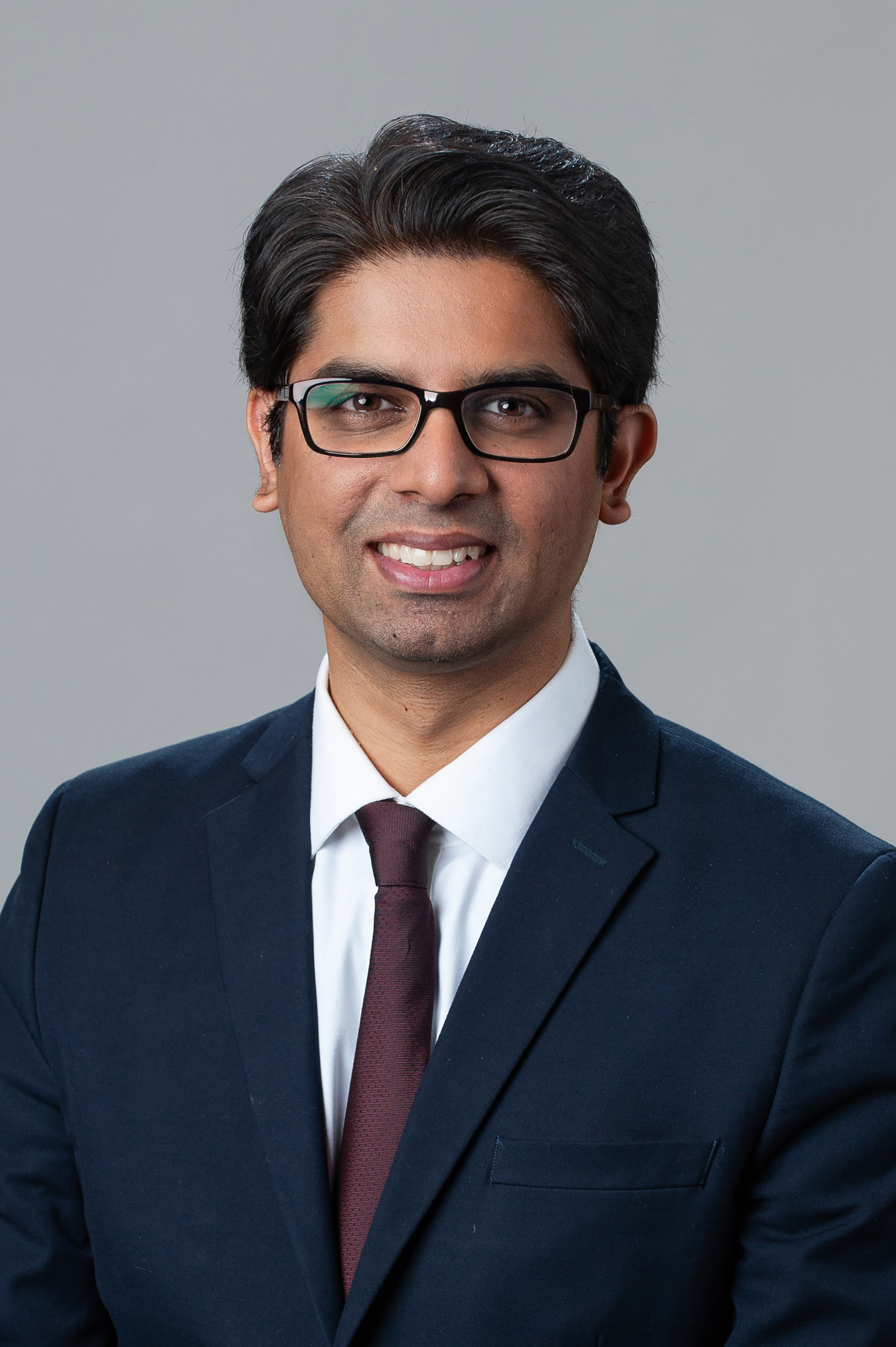
Imran Khan

Faculty Director

Imran Khan

Imran Khan is the Faculty Director of Northwestern University’s Master of Science in Healthcare Data Science (MHDS) program and a healthcare Data and AI leader with more than 18 years of experience across biopharmaceutical R&D, healthcare, digital health, data science, informatics, and technology.

At AbbVie, Imran is a Director leading R&D Data and AI Strategy across Medical Affairs, Value & Evidence, and the broader R&D organization. His work focuses on advancing the use of data, analytics, artificial intelligence, and emerging technologies to accelerate research, strengthen evidence generation, generate insights from complex healthcare data, and improve decision-making across the medicine development lifecycle.
Throughout his career at AbbVie, Imran has held leadership roles spanning R&D, Clinical Development, Medical Affairs, Commercial, and Digital Health. He has led and advanced capabilities in artificial intelligence and machine learning, real-world data and real-world evidence, digital health, data strategy and partnerships, analytics, and technology-enabled research. His experience also includes supporting global drug development and launches, building cross-functional capabilities and teams, and leading large-scale transformation, adoption, and change initiatives.
Prior to joining the biopharmaceutical industry, Imran worked at Advocate Health Care, where he led initiatives involving electronic health records, health information exchange, interoperability, patient portals, clinical quality improvement, population health, and value-based care for one of the largest physician communities in the United States. Earlier in his career, he worked with GE Healthcare and Walgreens on clinical, healthcare, and pharmaceutical technology solutions.
At Northwestern, Imran provides academic leadership for the MHDS program, including curriculum strategy and evolution, faculty recruitment and development, and ensuring that the program remains aligned with advances in healthcare data science, artificial intelligence, digital health, research, and industry practice. He has more than 15 years of teaching experience at Northwestern and has taught graduate courses in healthcare data science, health informatics, analytics, digital health, artificial intelligence, capstone, healthcare leadership, and related areas.
In addition to his leadership of MHDS, Imran teaches across multiple Northwestern graduate programs, including Health Informatics and the Pritzker School of Law. His interdisciplinary teaching connects healthcare, data, technology, research, leadership, and drug development, bringing practical perspectives from both industry and academia into the classroom.
Imran has also served in professional leadership roles with the Healthcare Information and Management Systems Society (HIMSS), including several years on the Board of Directors of the Greater Illinois Chapter. He is a Fellow of HIMSS and holds professional certifications in healthcare information and management systems, project management, and agile practices.

Contact Information

i-khan@northwestern.edu

LinkedIn

Education

MS in Medical Informatics, Northwestern University

MBA, University of Illinois

BS in Computer Engineering, University of Illinois

Information Systems Project Management Graduate Certificate, Northwestern University

Project Management Professional (PMP)

Agile Certified Practitioner (ACP)

Certified Professional in Healthcare Information and Management Systems (CPHIMS)

Fellow of Healthcare Information and Management Systems Society (FHIMSS)

Current Research Interests

Artificial intelligence, machine learning, and generative AI applications in healthcare, life sciences, and biomedical research
Healthcare data science, advanced analytics, and responsible AI
Real-world data, real-world evidence, and AI-enabled evidence generation
Digital health and biomedical informatics
Data and AI strategy, governance, and organizational adoption
Use of data and emerging technologies to improve clinical research, medicine development, and healthcare decision-making
Leadership, change management, and workforce transformation in data- and AI-enabled organizations

Selected Publications and Products

Digital Health and Informatics

Strategic Management

Change Management

Portfolio / Program / Project Management

Recognition

Multiple AbbVie President’s Awards recognizing contributions to drug launches and integrated brand team performance

Chief Financial Officer Award for development of an innovative patient services program

Chief Information Officer Award for development of market access budget impact capabilities

Unsung Hero Award recognizing contributions to a major drug launch

Selected participant in AbbVie’s Accelerated Leadership Development Program

Recent Courses

MHDS 403-DL : Introduction to American Healthcare, Digital Health and Analytics

MHDS 426: Applied AI in Healthcare

MHDS 498-DL : Capstone

Additional graduate teaching across Northwestern programs in Health Informatics and Drug Development

Teaching Approach and Philosophy

My goal is to create a rigorous, inclusive, and highly applied learning environment where students can connect data science, artificial intelligence, technology, and research methods to meaningful healthcare problems.
Healthcare data science is inherently interdisciplinary. Students need more than technical skills alone. They need to understand healthcare, data, research, technology, business, ethics, and the perspectives of the stakeholders who ultimately use the insights and solutions they develop. I therefore emphasize case-based learning, real-world healthcare challenges, hands-on application, discussion, and opportunities for students to translate concepts into practical decisions and solutions.
I continually evolve course content to reflect advances in artificial intelligence, machine learning, generative AI, digital health, real-world data, healthcare analytics, and biomedical research while grounding these technologies in responsible use, scientific rigor, and practical implementation.
As an alumnus of Northwestern’s Medical Informatics program, I also bring the perspective of having experienced this educational journey as a student. As Faculty Director, I aim to bridge academia and industry so that the MHDS curriculum remains academically rigorous, relevant to the rapidly changing healthcare landscape, and focused on preparing students to become the next generation of leaders in healthcare data science, artificial intelligence, research, and innovation.

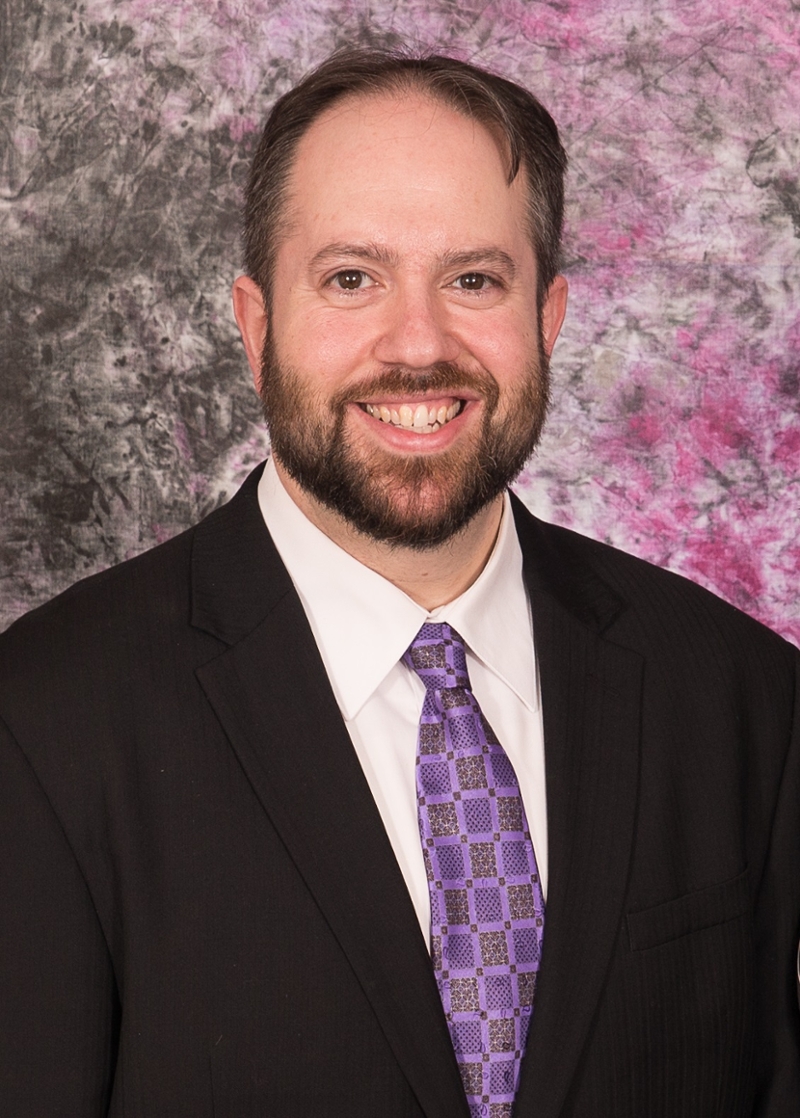
Lynd Bacon, PhD, MBA

Lynd Bacon

Lynd Bacon is a scientist and a natural philosopher. He teaches graduate and post-graduate courses in data science, machine learning, statistics, and research methods. He does research about health services delivery, product and service design, and genomic testing. His prior teaching experience includes having taught at The David Eccles School of Business at the University of Utah, Notre Dame University’s Mendoza School of Business, The University of Chicago’s Booth School of Business, Rush University, The University of Illinois at Urbana-Champaign, and the University of Illinois at Chicago. He has founded two software companies, and has held senior management and chief research officer positions in venture-funded start-up companies and in global business intelligence enterprises. Bacon has a PhD and an MA in cognitive and physiological experimental Psychology from the University of Illinois at Chicago, and an MBA with specializations in marketing, econometrics, and healthcare management from the Booth School of Business, The University of Chicago. He completed a two-year postdoctoral fellowship in neuropsychology at Rush University in Chicago, during which he did neuroscience research on healthy and patient populations, and saw patients with the clinical neurology and neurosurgery services.

Contact Information

lynd.bacon@northwestern.edu

lynd.bacon@hsc.utah.edu

Education

PhD, Experimental Psychology, University of Illinois at Chicago

M.A., Experimental Psychology, University of Illinois at Chicago

MBA, The Booth School, The University of Chicago

Postdoctoral Fellowship, Neuropsychology, Rush University

Current Research Interests

Analytics

Research Methodology

Policy Decision Support Machine Learning

Causal Inference

Product/Service Development

Relevant Work

Adjunct Assoc. Professor, Division of Epidemiology, Department of Internal Medicine, University of Utah, 2018 - present

Adjunct Assoc. Professor, Dept of Marketing, Stephen Eccles School of Business, University of Utah, 2018 - present

Adjunct Assoc. Teaching Professor, Operations and Analytics, Mendoza School of Business, Notre Dame University, 2016-2018

Affiliated Research Scientist, George E. Wahlen Dept. of Veterans Affairs Medical Center, 2018-present

Selected Publications and Products

Bacon, L. and Lenk, P. (2012) Augmenting discrete-choice data to identify common preference scales for inter-subject analyses. Quantitative Marketing and Economics, 10, 453-454.

Bacon, L. (2002) "Marketing." In W. Klösgen and J. Zyklow, editors. Handbook of Data Mining and Knowledge Discovery. Chapter 34, pp. 715-725. NY: Oxford University Press.

Bacon, L., Wilson, R., and Kaszniak, A. (1982) “Age Differences in Memory Scanning,” Peceptual and Motor Skills, 55(2):499-504.

Elrod, T., Russell, G., Shocker, A., Andrews, R., Bacon, L., Bayus, B., Carroll, J.D., Johnson, R., Kamakura, W., Lenk, P., Mazanec, J., Rao, V., and Shankar, V. (2001) “Inferring market structure from consumer response to competing and complementary products.” Marketing Letters, 13:3, 221-232.

Naik, P., Wedel, M., Bacon, L., Bodapati, A., Bradlow, E., Kamakura, W., Kreulen, J., Lenk, P., Madigan, D. and Montgomery, A. “Challenges and Opportunities in High dimensional Choice Data Analyses.” Marketing Letters, 2008.

Nausieda P.A., Bieliauskas L.A., Bacon L.D., Hagerty M., Koller W.C., Glantz R.N. (1983) Chronic dopamanergic sensitivity after Sydenham’s chorea. Neurology 33: 750–754.

Wilson, R. S., Kaszniak, A. W., Bacon, L. D., and Fox, J. H. (1982). Facial recognition memory in dementia. Cortex 18: 329–336.

Wilson, R..S., Fox, J.H., Huckman, M.S., and Lobick, J.J. (1982). Computed tomography in dementia. Neurology 32:9, 1054-1057.

Recent Courses

MSHA 422-DL : Artificial Intelligence and Practical Machine Learning

Teaching Approach and Philosophy

My approach to teaching at Northwestern emphasizes discovery, and the development of problem-solving and inquiry skills. It reflects recent research in the best ways to help people learn, while (mostly) staying within the parameters of the School of Professional Studies’ approach to pedagogy. My tendency is to organize course content in ways that encourage comparing related concepts and methods, rather than covering it in a linear, one topic at a time, manner. My assignments have multiple objectives, and are more like “mini-projects” than they are like undergraduate course assignments. I encourage my students to collaborate, and to lend each other assistance on required work in my courses.

Ariel Chandler

Ariel Chandler

Ariel Chandler is currently a data scientist and strategic consultant at Validate Health, which provides data driven guidance to healthcare organizations on value based care contracts. In 2020 she received her PhD in Health and Biomedical Informatics from the Health Sciences Integrated Program at Northwestern University. Her dissertation work involved the application of a complex network model to electronic health record data to identify when clinical care and teamwork have the greatest impact on patient outcomes. Ariel previously worked at Boston Children’s Hospital on research integrating electronic health record and genomic data, and at The Policy and Research Group in New Orleans on projects evaluating the implementation and impact of federally funded public health programs. She earned her undergraduate degree in Cell and Molecular Biology from Tulane University.

Contact Information

ariel.chandler@northwestern.edu

arielechandler@gmail.com

LinkedIn

Education

PhD Health and Biomedical Informatics from Northwestern University

Current Research Interests

Value-based care

Clinical networks

Network science Provider analytics

Secondary data use (EHR and claims)

Dimension reduction for modeling

Relevant Work

Data scientist and strategic consultant at Validate Health. I work with healthcare organizations wanting to optimize and expand their value-based care contracts by providing actionable analytics from internal and market claims data.

Recent Courses

MSHA 405-DL : Data Literacy and Analytics in Healthcare

Teaching Approach and Philosophy

I’ve been teaching Data Literacy and Analytics in Healthcare since 2020. After completing my PhD in Health Informatics at Northwestern in 2020, I have been working as a data scientist and strategic consultant at Validate Health. In my current position I work with healthcare organizations wanting to optimize and expand their value-based care contracts by providing actionable analytics from internal and market claims data.
Working in the healthcare analytics and informatics field is both fascinating and challenging because it is at the intersection of many fields where the domain knowledge crosses so many disparate disciplines. That requires constantly staying up to date on current healthcare industry news and methods through my work, reading and connections. However, no one will ever be an expert in every area, which at a fundamental level requires us all to be humble about the limits to our expertise and learn from each other. My expertise is in the healthcare data and analytics space and am constantly learning from colleagues who have first-hand experience in clinical care and the more technical backend aspects of data engineering. 
I really enjoy teaching in the MSHA program because the students bring such varied and interesting backgrounds to the class. My role as a teacher is to provide foundational knowledge and structure to guide the course through the material, but also to create the collaborative environment where we can all share and learn from each other’s experiences and expertise.

Eytan Dallal

Eytan Dallal

Eytan Dallal is a senior healthcare IT executive with over 25 years of experience in the private and public sectors, helping organizations think beyond simply using technology as a tool, and leading implementations of technology as a strategic business driver. As a former CIO in healthcare in the public and private sectors, he understands the complex nature of managing and security healthcare data across business silos and the challenges from a legal, compliance, security, privacy, and interoperability perspective.

Dallal has served as a keynote speaker and panelist in a number of seminars, recognized for his in-depth knowledge of technology, strategy, and business. He holds a Master's in Health Informatics from the College of Applied Health Sciences at the University of Illinois at Chicago, a Bachelor’s in Business Management from NEIU, and several industry certifications including HCISPP and HIPAA. He is an active member of AHIMA, HIMSS, and (ISC)2, and serves on the board of a community non-profit organization supporting education.

Contact Information

eytan.dallal@northwestern.edu

LinkedIn

Education

Masters of Healthcare Informatics, UIC

Machine Learning Implementation, MIT

Google Cloud Certified Professional Cloud Architect

Certified Six Sigma Green Belt

Certified Medicaid Professional

Certified HL7 FHIR

Certified Healthcare Information Security

Certified HIPAA Privacy and Security

Relevant Work

Head of Data and Analytics, Sinai Chicago

CIO of Illinois Medicaid Plan, Blue Cross Blue Shield

VP of Technology, Land of Lincoln Health Insurance

CIO, IL Framework, State of Illinois

Director, Bureau of Technology, Cook County

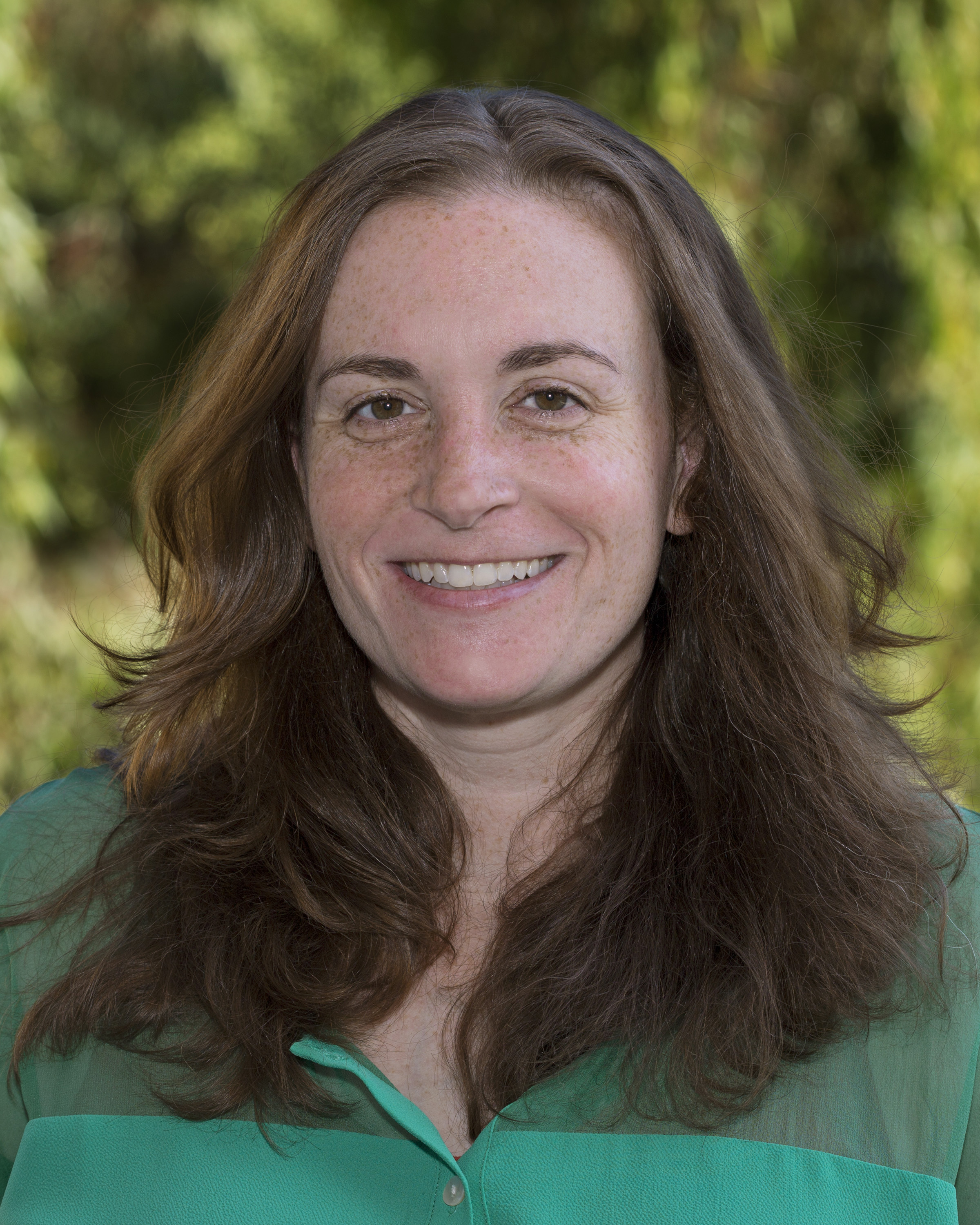
Christina Maimone

Christina Maimone

Christina Maimone is a data scientist with Northwestern University IT Research Computing Services, where she leads a team that supports researchers in learning data science, data visualization, and computer programming skills and applying them in their research.  Through consultations, project collaborations, working groups, and workshops, her team helps thousands of researchers across the university overcome technical challenges and undertake innovative research projects.  She especially enjoys projects that involve collecting new data, text analysis, and communicating effectively with data visualizations.  She is active in the research computing and data professionals community, where she works to build national networks of technical research professionals and develop career paths for academic data scientists and research software engineers.  Christina has a PhD in political science and a master's degree in statistics from Stanford University.

Contact Information

christina.maimone@northwestern.edu

GitHub

Education

PhD, Political Science, Stanford University

MS, Statistics, Stanford University

Current Research Interests

Text analysis methods

Research software

Teaching technology effectively

Relevant Work

Research Data Services Lead, Northwestern IT Research Computing Services, 2016-

Research Analytics Consultant, Stanford Graduate School of Business, 2014-2016

Senior Technical Analyst and Manager, Institute for Physical Sciences, 2006-2014

Selected Publications and Products

R Tidyverse Workshops, https://github.com/nuitrcs/r-tidyverse

R Shiny Workshop, https://github.com/nuitrcs/rshiny

R ggplot2 Workshop, https://github.com/nuitrcs/r-ggplot2-april2020

Good Enough Project Management Practices for Researcher Support Projects, PEARC19, https://dl.acm.org/doi/abs/10.1145/3332186.3332198 

Recent Courses

MSHA 455-DL : Data Visualization and Storytelling

Teaching Approach and Philosophy

I started teaching in the MSHA program in 2021. The courses I teach in the program are an extension of the short R, Python, SQL, and other workshops I teach for researchers as part of my position with Northwestern IT Research Computing Services. Being able to work with students over the course of the quarter, instead of just a few hours in a workshop, means we can explore topics in more depth, connect practical skills to theoretical frameworks, and work towards skill mastery instead of covering only the basics. I enjoy teaching because I learn new things every time I teach, both about the topic of the course and about teaching data science effectively. Methods and tools for working with data are constantly evolving. My goal when teaching is to help students develop skills for problem-solving and troubleshooting their work so they have the tools to learn more on their own in the future. Being able to make use of the many great resources available beyond the core course materials means you'll be able to evolve your skills over time to meet any data challenges you face.

William T. Mickelson (Bill)

Bill Mickelson

Dr. William T. Mickelson is an applied social science statistician and statistical consultant with over 35 years of experience in both academia and industry.  Mickelson has taught across the spectrum of research and statistical topics, including courses in mathematical and stochastic modeling, general linear statistical models, response surface methods, multivariate statistical methods, and linear and non-linear optimization. He is deeply involved with statistics education and the promoting of statistical reasoning, thinking, and literacy.  He has also maintained a statistical consulting practice with clients primarily in  Health Care, state and local government, health and fitness, transportation, insurance, banking and finance, and Higher Education.

Contact Information

william.mickelson@northwestern.edu

Education

Ph.D., Educational Psychology, University of Wisconsin, Madison, WI (1995)

M.S., Statistics and Operations Research, Michigan State University, East Lansing, MI (1985)

B.A., Mathematics, Saint Olaf College, Northfield, MN (1983)

Current Research Interests

Research interests include: the robustness of commonly used statistical tests and predictive models, the use of automated variable selection procedures in regression, modern re-sampling and non-parametric statistical methods, the teaching and learning of statistics, and the construction of knowledge through modeling quantitative data.

Relevant Work

Assistant Professor of Instruction (faculty), School of Professional Studies, Northwestern University, Evanston, IL (2011–present).   

Associate Professor of Statistics, Department of Mathematics, University of Wisconsin-Whitewater, Whitewater (2007- 2019). 

Senior Statistician and Senior Consultant, Chamberlain Research Consultants, Madison, Wisconsin (2003–2007).

Director, Nebraska Evaluation and Research Center, University of Nebraska-Lincoln (2002–2003).

Assistant Professor of Research Methods, Department of Educational Psychology, University of Nebraska, Lincoln (1998–2003)

Assistant Professor of Statistics, Department of Mathematics/Division of Statistics, University of Idaho, Moscow (1995–1998).

Selected Publications

Mickelson, W.T. (2013).  A Monte Carlo Simulation of the Robust Rank Order-Test Under Various Population Symmetry Conditions.  Journal of Modern Applied Statistical Methods, 12(1), 1-13. 

Welch, S.A., & Mickelson, W.T. (2013).  A Listening Competence Comparison of Working Professionals.  International Journal of Listening, 27(1), 85-99. 

Mickelson, W.T., & Welch, S.A. (2012).  Factor Analytic Validation of the Ford, Wolvin and Chung Listening Competence Scale.  International Journal of Listening, 26(1), 29-39. 

Hankes, J., Skoning, S., Mason, L., Fast, G., Beam, J., Mickelson, W., and Merrill, C. (2011).   Closing the mathematics achievement gap of Native American students identified as learning disabled, Voices of Native American Indian Educators:  Integrating History, Culture and Language to Improve Learning Outcomes for Native American Indian Students. Editor Sheila T. Gregory. University Press of America, Lanham, MD. 

Mickelson, W., & Heaton, R. (2004).  Primary teachers’ statistical reasoning about

data.  In, Ben-Zvi, D., & Garfield, J. (Eds.), The Challenge of Developing Statistical Literacy, Reasoning and Thinking.  Kluwer Academic Publishers, Netherlands.                           

Heaton, R., & Mickelson,W.T. (2002).   The Learning and Teaching of Statistical Investigation in Teaching and Teacher Education.   Journal of Mathematics Teacher Education, 5, 35-59. 

Heaton, R. & Mickelson,W.T., (2002).  Reasoning about data and distribution through the statistical investigations of a third grade classroom.  Statistics Education Research Journal, 1(1), 31-33.

 Swearer, S., Song, S., Cary, P., Eagle, J., & Mickelson, W.  (2001). Psychosocial correlates in

bullying and victimization:  The relationship between depression, anxiety, and bully/victim status.  In, Geffner, Loring & Young (Eds.), Bulling Behavior:  Current Issues, Research, and Interventions.  Binghamton, NY, Hayworth Maltreatment and Trauma Press.

Sudilovsky, A., Cutler, N.R., Sramek, J.J., Wardle, T., Veroff, A.E., Mickelson, W.T., Markowitz, J., & Repetti, S. (1993).  A pilot clinical trial of the angiotensin-converting enzyme inhibitor ceranapril in Alzheimer disease.  Alzheimer Disease and Assorted Disorders, 7(2), 105-111.

Veroff, A.E., Cutler, N.R., Sramek, J.J., Prior, P.L., Mickelson, W.T., & Hartman, J.K., (1991).  A new assessment tool for neuropsychopharmacologic research:  The computerized neuropsychological test battery.  Journal of Geriatric Psychiatry and Neurology, 4(4), 211-217.

Recognition

Teaching Scholars Fellow, University of Wisconsin – Whitewater, 2010

Distinguished Teaching Award, Teachers College, University of Nebraska-Lincoln

Recent Courses

MSDS 401    Applied Statistics with R

MSDS 410    Supervised Learning Methods

MSDS 411    Unsupervised Learning Methods

MSDS 460    Decision Analytics

MSHA 409   Statistical Analysis with R

MSHA 410   Regression and Multivariate Analysis

MSHA 411   Advanced Data Modeling for Health Analytics

Victoria Wangia-Anderson

Victoria Wangia-Anderson

Dr. Victoria Wangia-Anderson is an Associate Professor and Program Director at the University of Cincinnati. She has a doctorate degree in Health Informatics from the University of Minnesota. She also completed the Public Health Informatics fellowship at the Centers for Disease Control and Prevention (CDC) in Atlanta, Georgia. She has a strong interest in leveraging technology and data to promote health and reduce health disparities. Wangia-Anderson has experience teaching and using health data science techniques and programming. She also has extensive experience teaching and developing courses. She has been a member of several industry organizations, including the American Medical Informatics Association (AMIA), the American Public Health Association (APHA), the Healthcare Information and Management Systems Society (HIMSS) and the American Health Information Management Association (AHIMA). In 2016, Dr. Wangia-Anderson received HIMSS fellow status, earning her the FHIMSS credential. 

^ Back to top ^